

Service desk and helpdesk consultant for struggling IT teams
When your IT service desk is missing SLAs, the backlog keeps growing and good people are leaving, I step in as an experienced service desk consultant to turn it round. I diagnose the problems, rebuild the processes and coach your team, then hand back a stable, documented and performing desk.
Request a consultation call
The first call is a conversation, with no obligation and no hard sell.
Signs your service desk needs outside help
The service desk is the first point of contact most staff have with IT, so when it struggles, everyone notices. It rarely fails overnight. The warning signs usually build up over months:
SLAs are being missed
Tickets sit in the queue, simple queries take days to resolve, the backlog keeps rising and customer satisfaction is dropping.
There's no ownership
Tickets get bounced from team to team, so resolution takes longer and end-user frustration grows.
There's no consistent process
Every analyst handles tickets their own way, so troubleshooting the same fault starts from scratch every time it comes in.
Morale is low
Engagement has dropped, there's no clear progression, people are leaving and every round of recruitment adds to the load on the remaining team members.
Leadership can't see what's happening
There are no meaningful KPIs, so nobody can say with confidence how the desk is performing. Reporting doesn't exist, and the team don't know what they're being measured against.
The desk is under scrutiny
The business, a parent company or a contract re-tender is putting pressure on the function to improve.
If two or three of those apply, the team usually needs more than a new tool or another hire. It needs someone to lead the fix.
What I deliver
Turning underperforming teams into high-performing ones, fast.
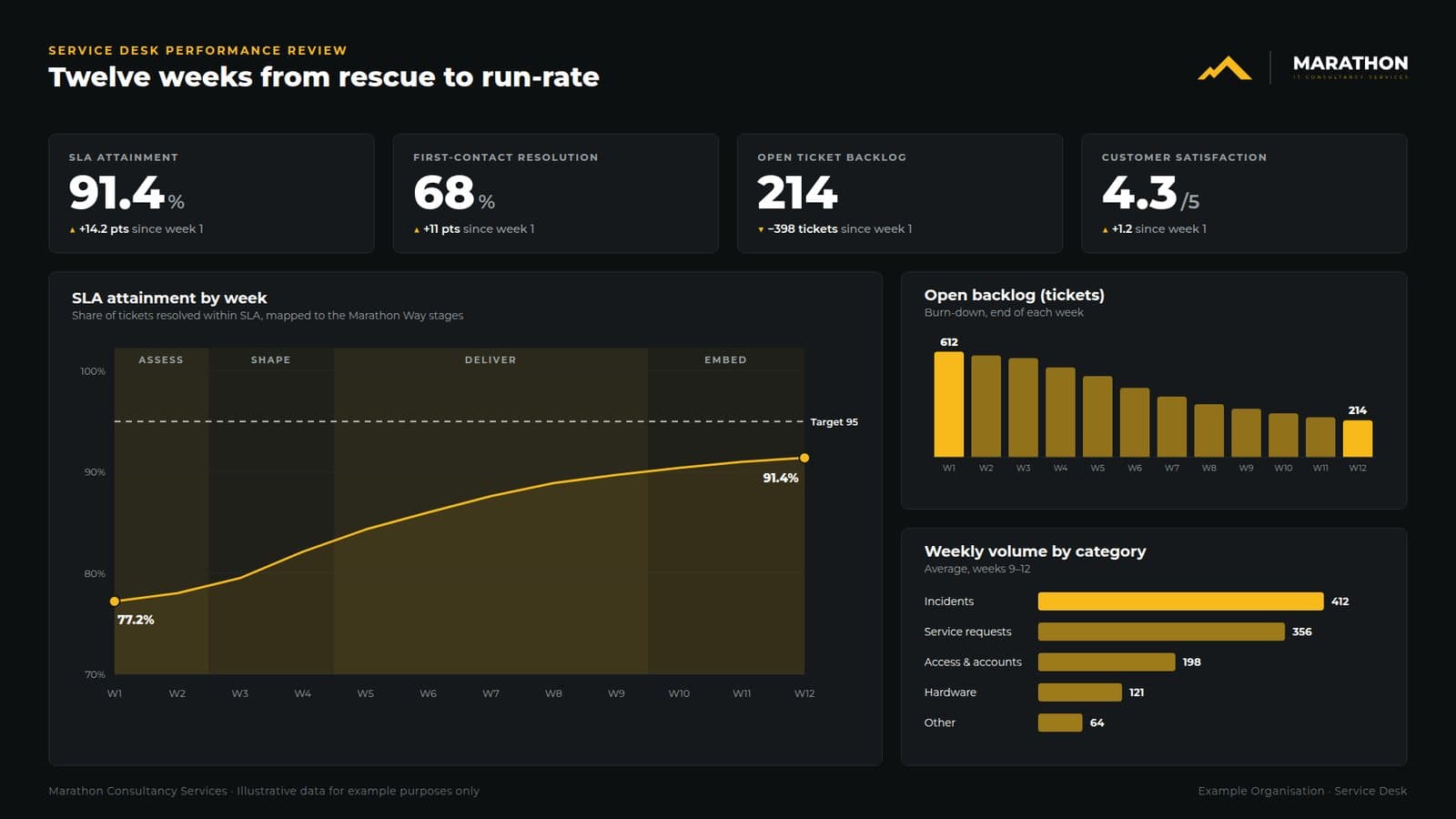
- 01Rapid diagnostic. A structured health check of people, process and tooling, working collaboratively with your service desk team. You get an evidenced picture of what's causing the problems, not a list of symptoms.
- 02Process redesign. Incident, request and problem management rebuilt in line with ITIL best practice, sized to your team rather than copied from a manual.
- 03Team restructure. Roles, responsibilities and shift or scheduling patterns matched to real demand, with skills gaps identified and addressed.
- 04Coaching in place. I upskill your analysts and team leads as we go, so the capability is left behind rather than walked out the door.
- 05Reporting and KPIs. A simple, honest performance dashboard that shows leadership how the desk is doing.
- 06Stabilise and hand over. A clean, documented handover to a permanent leader or your existing management.
How a service desk rescue runs
A core rescue usually takes 8 to 12 weeks, and it can be extended if the desk needs longer to stabilise. It follows The Marathon Way, my five-phase approach:
1. Assess
I get under the hood of your processes, people, toolsets and culture to understand exactly what's happening and why. This is the health check and the first part of painting the current picture.
2. Shape
I put together a report on the current state and a roadmap to where the desk needs to be, then present it to senior leadership with the justification, costs and timeframes.
3. Deliver
Once that's signed off, I start making the changes, whether that's optimising toolsets, refining or introducing process, or restructuring the team.
4. Embed
Training sessions, coaching for your leads and documentation, so people are bought in and the new way of working holds.
5. Refine
Stability first, then dashboards, reporting packs and KPIs that keep the desk improving, with any changes driven by real data.
I work onsite or on a hybrid working pattern and can usually start within one to two weeks of agreeing the engagement.
Who this is for
This service is a good fit for:
- An underperforming helpdesk or service desk, or a newly formed one that hasn't found its feet
- Teams inherited through a merger, acquisition or outsourcing transition
- Functions in "special measures" ahead of a contract review or re-tender
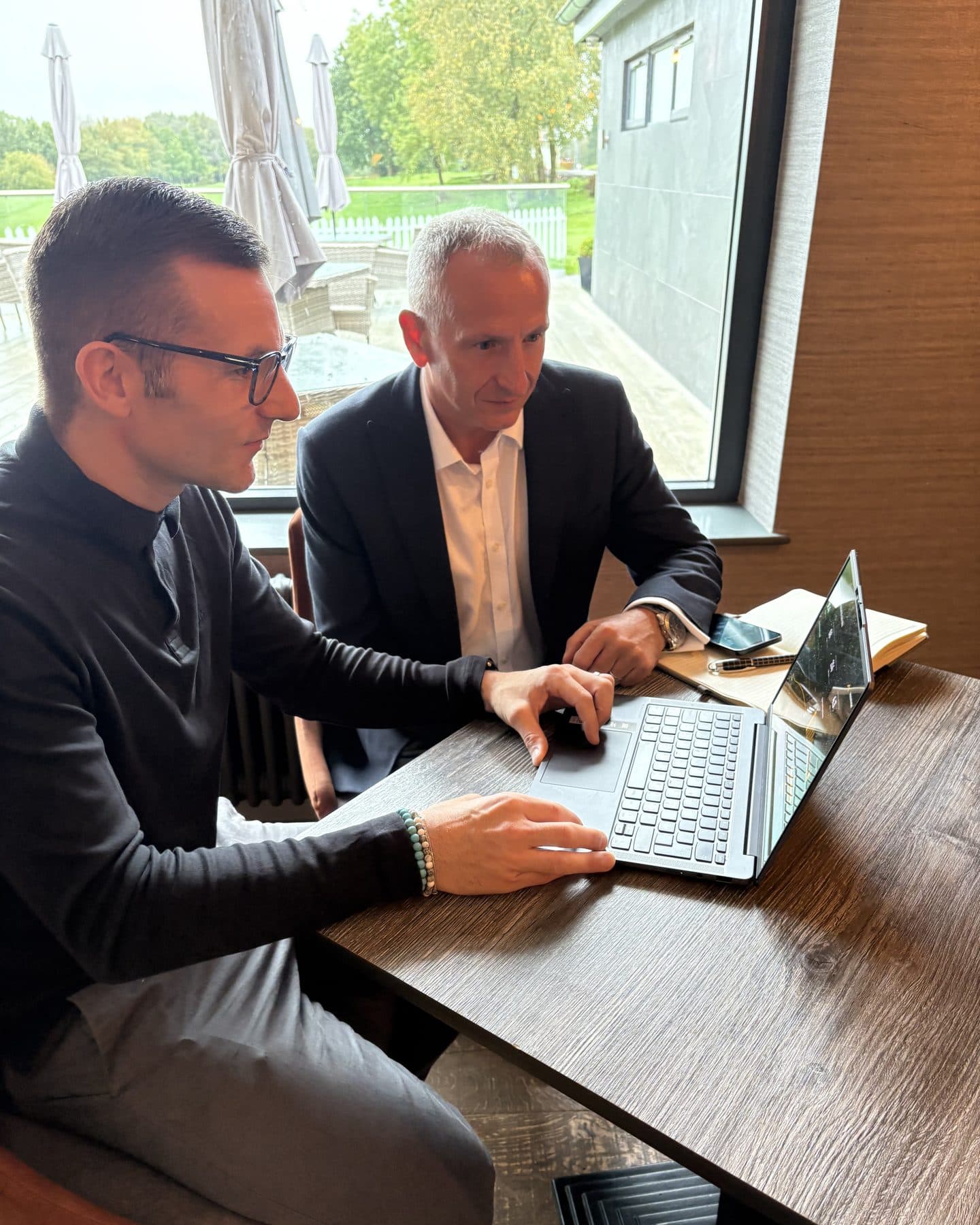
It works best when you want your own team to run the desk afterwards. I'm not a managed service provider and I don't take your service desk over permanently. The aim is a stronger in-house team, better technical support for your users and a workplace people want to stay in.
What people say about working with me

Greg turned an underperforming, demotivated service desk team into a highly professional, service-focused, customer-centric team, recruiting and building a talented team of professionals to ensure IT capability was maintained on a global basis.
In the three years I've worked alongside Greg, I've seen him transform the Technology Service Desk into one of the most efficient and focused teams in the business. [...] Greg has championed and overseen a number of significant changes since joining the team, including the roll out of a new ticketing software (which has since been adopted throughout the business), and implemented SLAs which see his team score as one of the highest teams in internal feedback surveys.
Service desk consultant FAQs
What does a service desk consultant do?
A service desk consultant reviews each support role and how the team works together, then fixes what's holding it back. That can mean redesigning processes, restructuring the team, introducing proper KPIs and coaching team leads. I lead the change myself, then hand the desk back to your managers.
Is a helpdesk the same as a service desk?
Most organisations use the two names for the same team, and I do the same work under either. Strictly speaking, a helpdesk fixes things when they break, while a service desk is the single point of contact for everything IT provides, including service requests. If you came looking for a helpdesk consultant, this is the right page.
How is this different from outsourcing the service desk?
Outsourcing hands your service desk to a third party for good. A rescue keeps it in-house and makes your own team better at running it. If you're thinking about outsourcing, my supplier transition service can help you do that safely instead.
How long does a service desk rescue take?
The core rescue usually takes 8 to 12 weeks. Some desks need a longer stabilisation period afterwards, and we can agree that as we go.
Will you replace my service desk manager?
Not permanently. I lead the function during the rescue if that's what's needed, then hand over to your permanent leader or existing management. If the role needs filling, I can also help write the job description for a service desk manager. If the gap is in leadership rather than the desk itself, interim or fractional ITSM leadership may be a better fit.
Do you work remotely?
The work is onsite or hybrid. Fixing a struggling team is much easier when you're sat with them for at least part of the week.
Get your service desk back on track
Tell me what's happening in your support team and I'll give you an honest view of whether a rescue is the right answer.
Talk about a service desk rescue